What were the big ideas?
The big ideas from this week following on from week 7 included a more of a focus on how to teach number and place value. I also learnt about the relationships involved with related resource that will help assist this while making lessons engaging.
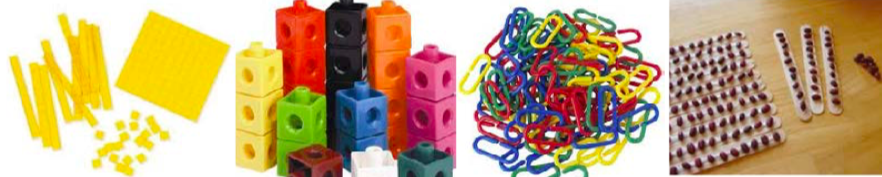
Number and Place Value: one concept, skill or strategy
During the first 3 years of school, is when students start to investigate Place Value additively as they discover the values of the digits. It is recommended that they investigate both standard and non-standard additive place value types, while being able to describe numbers in place values flexibly (A Learning Place, n.d). They usethis new found understanding to complete tasks such as adding and subtracting single-digit, tens and two-digit numbers using place value methods.
From Year 3 onwards, students continue to investigate standard and non-standard place value of larger numbers and number that include decimals. Using this understanding they start to add and subtract or multiply and divide, larger whole numbers and decimals using these standard and non-standard additive place value and multiplicative place value methods (A Learning Place, n.d).
Misconceptions
Misconcepetions in place value may develop for a variety of reasons. They may be due to lack of knowledge or a previous misunderstanding. Some place value misconceptions can be predicted prior to a lesson and tackled at the planning stage to diffuse, or prevent misconceptions from becoming more frequent throughout the rest of the class.
In order to do this, the teacher needs to have the knowledge of why these misconceptions may have occurred. Many of the mistakes that students make with place value written algorithms are due to their misconceptions of basic earlier operations from weeks 2-5 content.
Resources or teaching strategies
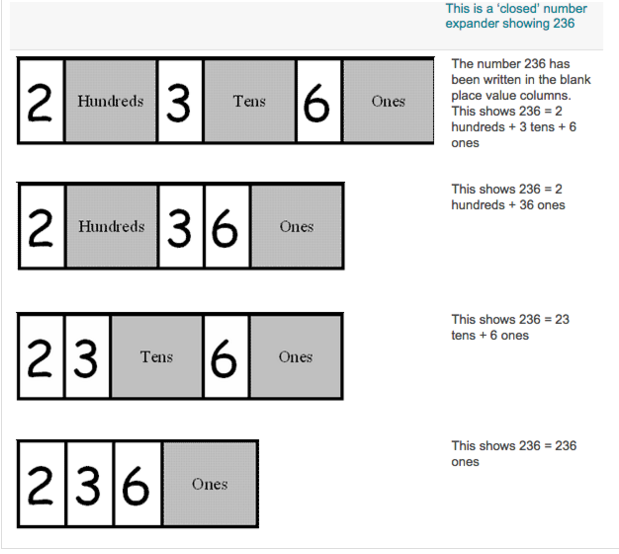
Number expanders are easily made by folding strips of paper. Students can enjoy the given challenge of being able to fold them correctly in a fan pattern. Number expanders contain blank spaces next to the written word of each place value as shown above, giving students the chance to add their own numbers . This teaching resource is used to demonstrate the concept of place value and help students gain a visual understanding of place holding within the place value system.
Textbook : concept, skill or strategy
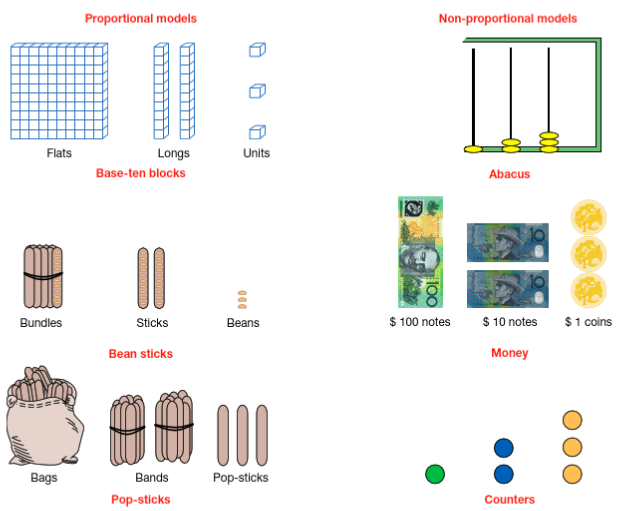
Rey chapter 8 Extending number sense: place value explains that students require a great deal of active experience with making quantities; composing and decomposing numbers; recording multi-digit numbers and connecting models, pictures and symbols in their primary school years (Reys, 2014). The learning of ths particular topic cannot be rushed as it might lead to further misconceptions and a close dependence on mathematical meaning the concept will never be fully understood.
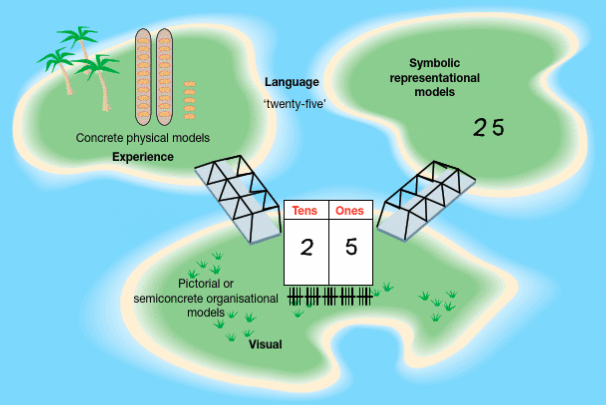
Later confusion as students get older with the four main operations, decimals and measurement has proven to be often linked with inadequate place value understanding not enough practice with different modelling methods. Also, important skills such as estimation when solving given problems is enhanced by better place value understanding (Reys, 2014).
References
A Learning Place. (n.d.). PLACE VALUE (kindergarten / Prep / Reception to Year 6) Teaching Resources Archives. Retrieved from https://alearningplace.com.au/category/teaching/teach-by-concept-teach/teach-number-algebra/teach-place-value/
Extranet Education. (n.d.). Number Expanders. Retrieved from https://extranet.education.unimelb.edu.au/SME/TNMY/Decimals/Decimals/teaching/models/nexpand.htm
Math Songs by NUMBEROCK. (2016, December 12). Place Value Song For Kids | Ones, Tens, and Hundreds | 1st Grade, 2nd Grade, 3rd Grade [Video file]. Retrieved from https://youtu.be/a4FXl4zb3E4
Reys, R. E. (2014). Helping children learn mathematics 2e. Retrieved from https://ebookcentral-proquest-com.ezproxy2.acu.edu.au

 Weekly Reflections