What were the big ideas?
The big ideas from this week involved looking at the concept of Geometry. Initially I was under the impression that geometry was specifically the learning of shapes and their properties. However, after this weeks lessons I now know through demonstrations that the concept of geometry involves a study of shape, space and also measurement (Jameson-Proctor, 2019). This directly links to the week 11 Measurement content as students often need measure the perimeter or area of shapes or their various angles, sides, faces or vertices.
Before students start learning geometry, they first need to physically engage and experience the attributes of shapes for themselves and know how they are involved in our everyday lives. Only after this prior knowledge can students start solving formulas.
My personal understanding of this weeks topic has significantly changed as I have learnt about the importance geometry has in our everyday lives and students should be presented with more oportunities to apply their geometric knowledge beyond traditional classroom settings. Because of these new understandings, in the future I will make sure I utilise things like cognitive development, sensorimotor stage and the concrete stage so students can make meaning of geometry.
Geometry: one concept, skill or strategy
There are many skills involved with the concept of geometry, one of which is being able to visually draw and model different shapes. This skill involves an already sound understanding of geometry, and is the third skill in the “5 Basic Skills of Geometry.” Because of this, students must have previously communicated the attributes and relationships of shapes.
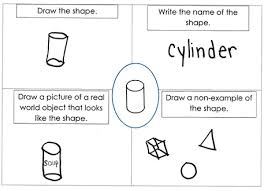
This skill involves the student being able to sketch and draw 1D, 2D and 3D shapes to scale while using materials such as cardboard, blocks and clay to model these shapes in fun and different ways (Jameson-Proctor, 2019). Informal shape constructions such as “Nets” which is folding paper to create a shape should be explored before the more formal introduction of technologies like protractors and compasses. This particular skill would usually be introduced whenmost students are at the materials and mathematics stage of the language model. This is mainly because it involves introducing mathematical materials and language that relate to geometry.
Misconceptions
A common geometry misconception that students can have when first learning this concept is that a prism and a pyramid are the same thing. This misconception is oftenly formed between the pyramid and the triangular-based prism.
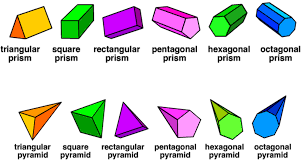
This misconception is more likely to occur when students have not quite understood the specific attributes of prisms and pyramids , or they do not understand that the different names mean that these two shapes have different attributes.
In order to stop this misconception from developing I would start by taking students back to the children and materials language stage of the model. This is so they can link the shapes again with real experience and examples (such as the egyptian pyramids). When revisiting these two particular shapes, It is the teachers job to discuss the attributes of these shapes while getting students to model, draw and create “nets” of them. This will allow students to recognise the difference and explain that a pyramid has a base with triangular faces reaching up to a point and how the prisms has a base, together with a translated copy of it.
ACARA
Geometry is first introduced in the foundation year, for students within the Australian Curriculum, Assessment and Reporting Authority (ACARA, 2017)
Mathematics/ Foundation Year/ Measurement and Geometry/ Shape/ ACMMG009

Scootle Resource
Shape sorter: Basic Shapes is a Scootle resource that can help students compare shape features in order to identify the geometric properties that define a set of shapes. (Education Services Australia, 2013). In this game students must help sort single or pairs of given shapes. This resource was recommended for students in Year 5 as it may be to advanced to align with the foundation year curriculum (ACMMG009) where students are required to sort and describe shapes in their environment.
All Screenshots for this game were retrieved from: http://www.scootle.edu.au/ec/viewing/L8163/index.html
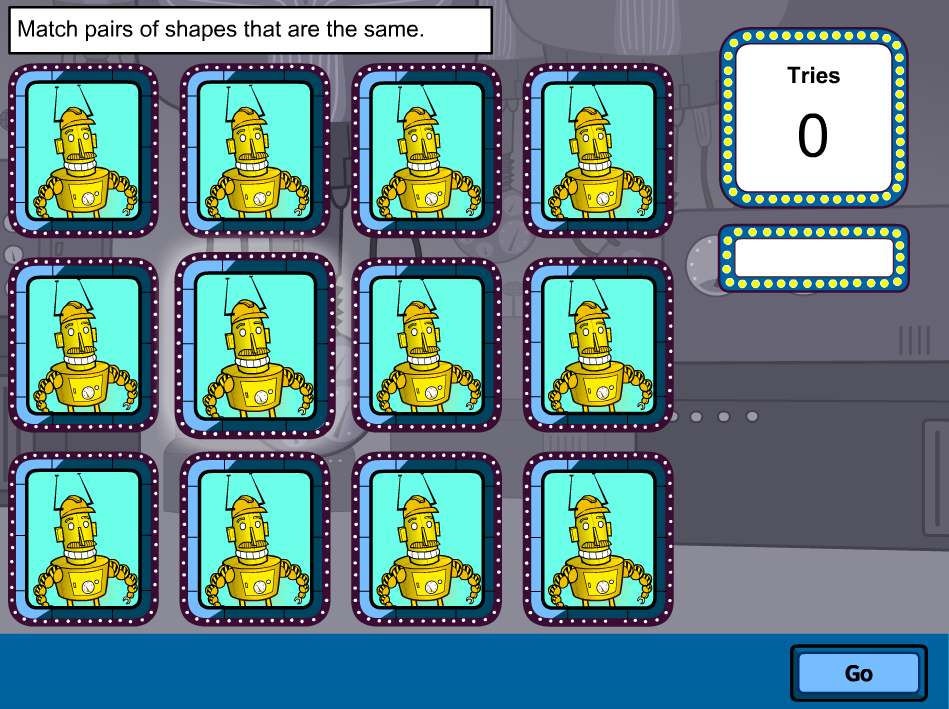
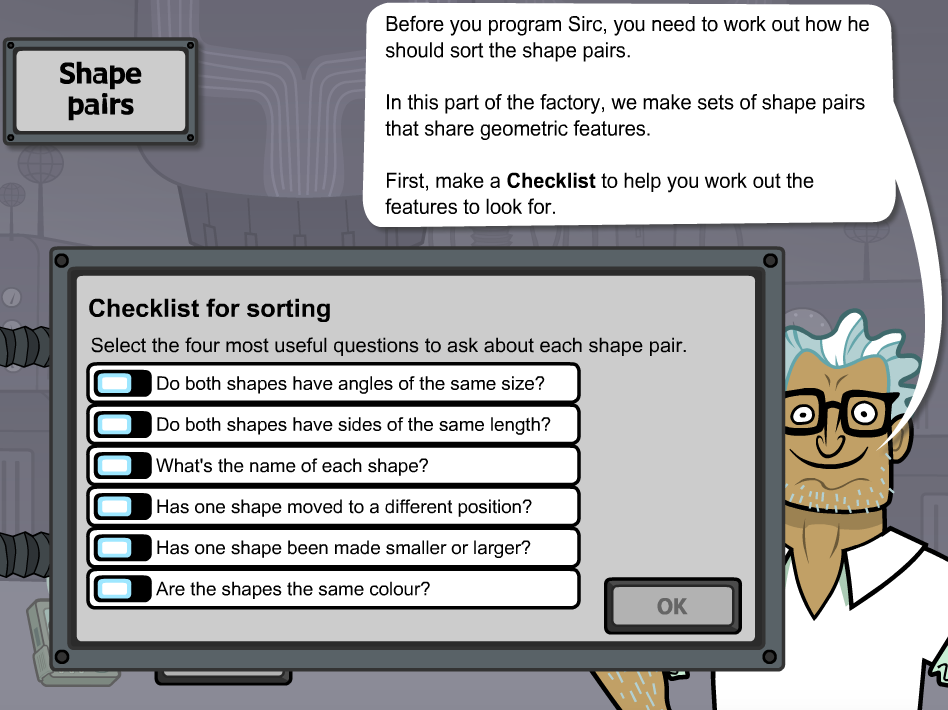
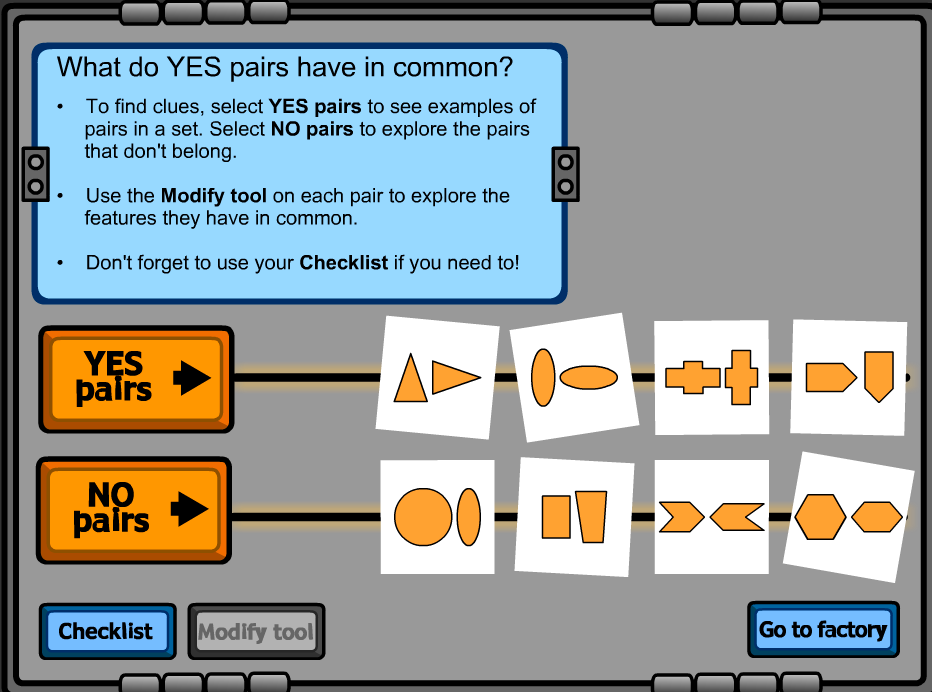
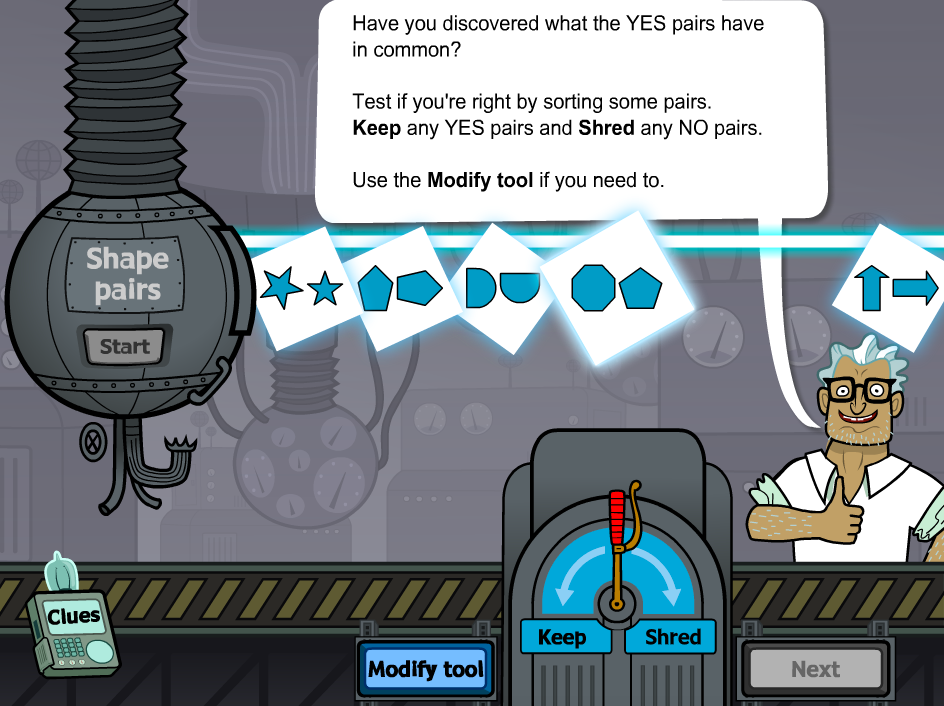
This would be used when children are at the mathematics language stage as they use language such as length and geometric. In this particular resource they do not point out the names of the shapes students will be presented with, therefore students would have to already know that names of the shapes. This may potentially limit some students if they don’t already have an understanding of these names. Overall, in order for students to fully understand the concept of geometry and how various shapes can be identified by their physical attributes, this interactive game could be easily utilised as a tool to help children visualise and grow their knowledge of shapes.
Resources or teaching strategies
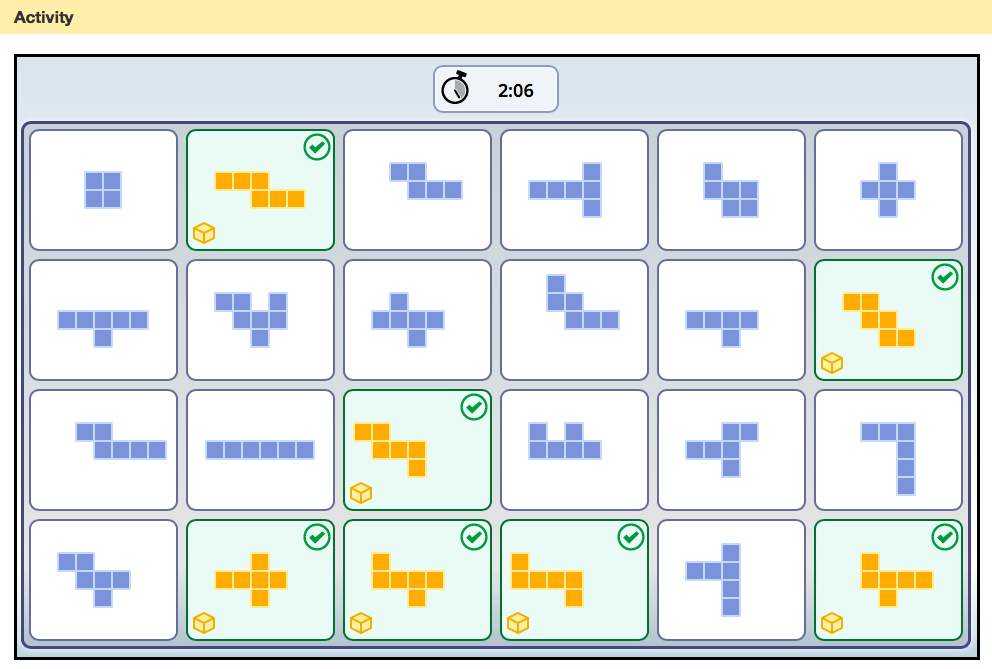
Cube Nets is another online game that recommended for students in year 3 through to year 5. Students can play this in order to test and revisit the number of faces on a cube. This game enables students to identify the different net patterns that could be successfull and ask themselves which of these nets will form a cube? (National Council of Teachers of Mathematics, n.d.). This game would be used for children at the materials language stage.
However, this game does contain some limitations, as students are not physically experiencing these nets in real life. An advantage of utilising a resource like this would be when students don’t personally own some of these nets at home, and this game would provide an easy way to demonstrate this when there is a lack of resources or time to make these in classroom. One final limitation to this game is it only focuses on cube nets, to make this resource more effective creating more similar to it with different shapes would become very useful for teachers.
Textbook : concept, skill or strategy
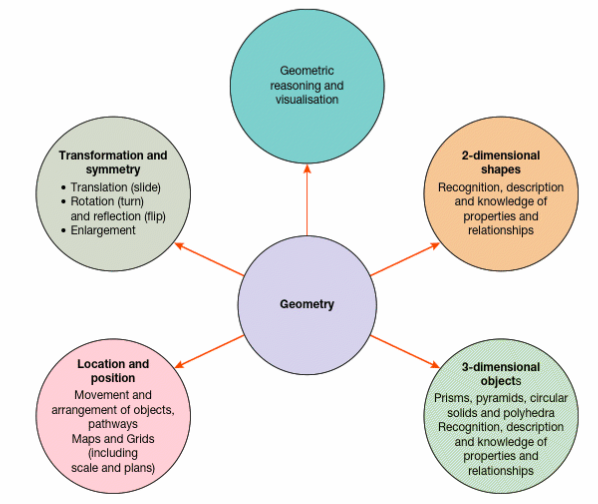
Reys chapter 16 explains why students are required to be able to describe properties of 3-dimensional objects to explain how 2 or more different objects are alike or different geo metrically through comparison (Reys, 2014).
Even though students begin learning describing and sorting are processes in early childhood and it should be continued throughout most of primary school. When students reach higher grades more complex and unfamilliar properties can be added to thier repertoire. These describing and sorting activities can help students develop the ability to think abstract/relational which is an essential skill for high school geometry where more complex responses are required (Reys, 2014).
References
Education Services Australia. (2013). Shape sorter: basic shapes. Retrieved from http://www.scootle.edu.au/ec/viewing/L8163/index.html
Jack Hartmann Kids Music Channel. (2018, April 24). Shapes, Sides and Vertices | Version 1 | Jack Hartmann [Video file]. Retrieved from https://youtu.be/24Uv8Cl5hvI
Jamieson-Proctor, R. (2019). EDMA241/262 Mathematics Learning and Teaching 1: Week 9 Part 1 and 2, Brisbane, Australia: Australian Catholic University.
National Council of Teachers of Mathematics. (n.d.). Cube Nets. Retrieved from https://www.nctm.org/Classroom-Resources/Illuminations/Interactives/Cube-Nets/
Reys, R. E. (2014). Helping children learn mathematics 2e. Retrieved from https://ebookcentral-proquest-com.ezproxy1.acu.edu.au
Scootle. (2019). Home. Retrieved from https://www.scootle.edu.au/ec/p/home

 Weekly Reflections