What were the big ideas?
the big ideas included in week 4 involved exploring the concept of multiplication and the relationship between that and addition, becuase it is simply described as repeated addition of equal groups. Due to this being the case, students must have a strong understanding of the concept of addition before being introduced to the multiplication concept.
There are various ways we can visually model multiplication problems to assist students in grasping the concept of multiplication. The main 4 commonly used in classroom or frequently referred to are set, array, measurement and combinations each one has a different physical representation of the multiplication concept. Visually representing these models has become an important teaching tool in getting students to see these relationships.
Multiplication: One concept, skill or strategy
When working with the facts that have even numbers such as2, 4 and8 as one of the factors, you can use the Doubles Strategy. Using proportional adjustment to solve multiplication problems such as doubling, can be used to make larger multiplication problems easier to solve. For example, 3 x 16 is the same as 6 x 8. By utilising this strategy, it also allows students to realise commutative laws such as 6 x 8 and 8 x 6 being the same and achieving the same answer, making it easier to retain multiplication facts mentally.
Misconceptions
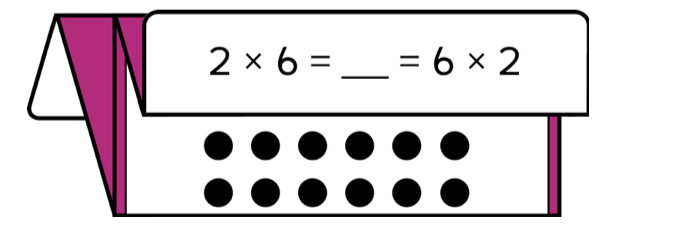
A common misconception about multiplication is that frequently most students do not understand the commutative or turnaround properties of the multiplication facts they are supposed to mentally retain. The reason this particular misconception might occur is because multiplication problems are represented in different ways, such as 6 x 10, or 6 groups of 10, being the same as 10 x 6, or 10 groups of 6 which may easily confuse children . Students may not be able to understand the commutative or ‘turnaround’ property that is associated with multiplication, meaning the order in which the factors are written does not make a difference to finding the right answer or “Product”.
By being equipped with different strategies to make solving multiplication problems more efficient we can stop students from being overwhelmed by having to remember so many multiplication facts.
Because of this in the future to prevent this misconception from occurring by demonstrating as soon as possible the ‘turnaround’ principle within multiplication, where 10 x 6 and 6 x 10 are equal. I will also make sure that I use the correct language and terminology when doing this, such as ‘turnaround’, while utilising array models to represent this visually, so that students can visualise this when faced with a similar problem.
ACARA
Multiplication is first introduced within the Australian Curriculum in Year 2, for students within the (ACARA, v8.3, 2017).
Mathematics/ Year 2/ Number and Algebra/ Number and place value/ ACMNA013

Scootle Resource
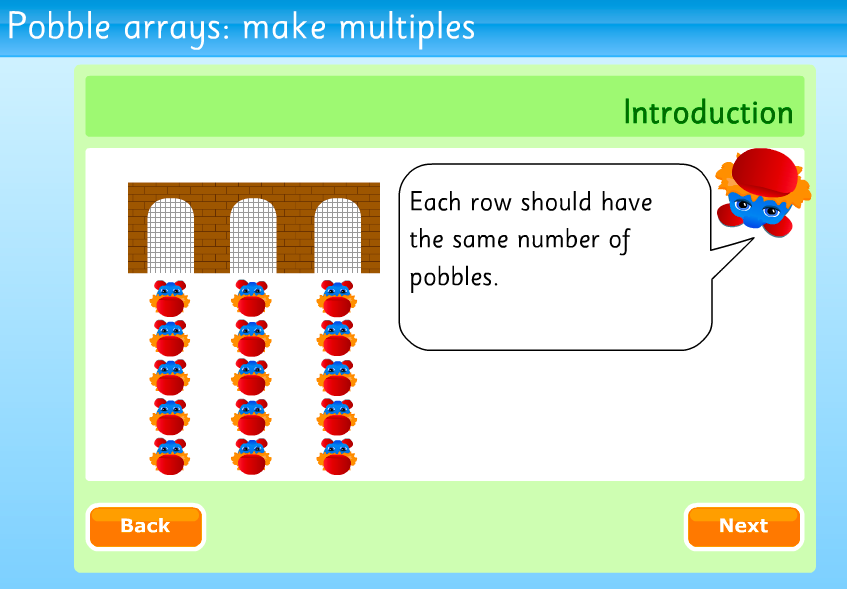
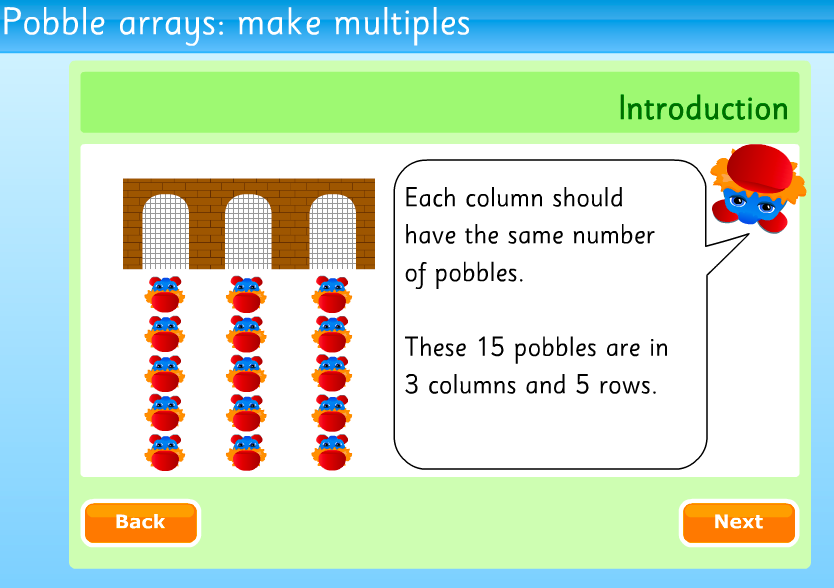
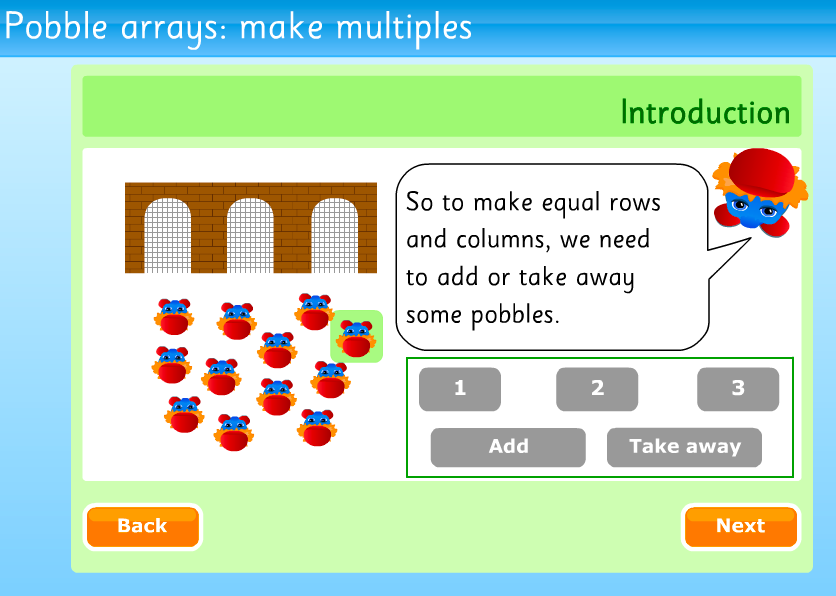
The aim of this interactive game is to help creatures line up and walk through gates. But in order for them to be able to move through the gates the rows and columns must be equal. For example, start with 23 pobbles. Students must make a prediction to whether the number can be divided into an equal number of rows. If not, they can then add or subtract pobbles to make a number that will work for them to move through the gates.
Students are introduced to the commutative property of multiplication. A dynamic array provides a visual model to support understanding of the multiplicative relationship between factors.
Education Services Australia, 2013
Resources or Teaching strategies
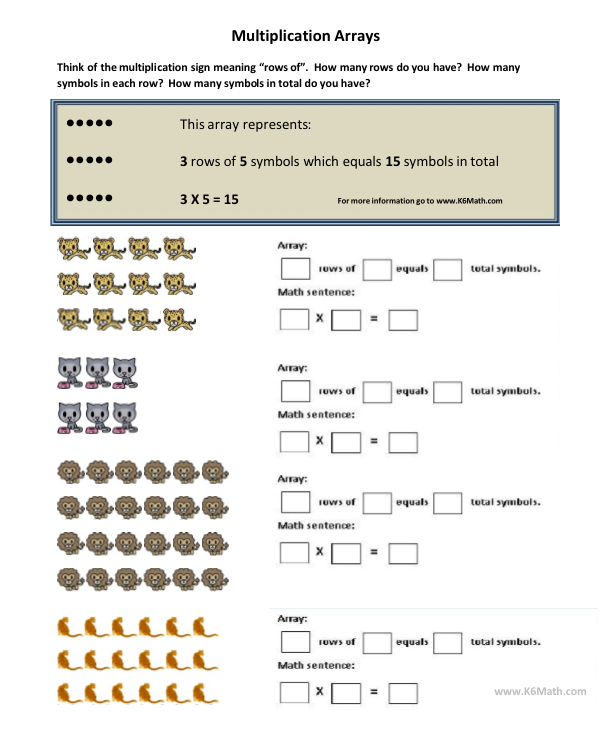
This array’s worksheet is a resource that could be used to demonstrate the concept of multiplication. Students are required to fill in the blanks on this sheet in various ways such as a visual array and symbolic math scentence. It shows the students the many ways that they can represent multiplication, in order to gain more of a concrete understanding of the concept due to the assisstance of pictures.
This resource would be appropriate to use at the beginning of the symbolic stage of the language model, as students represent their answers using worded problems in conjunction with symbols and number sentences. However, this resource has limitations as some students who struggle to grasp the concept need physical objects such as counters and blocks to touch and move in order to visually represent and conceptualise multiplication.
Textbook : concept,skill or strategy
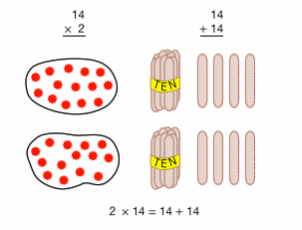
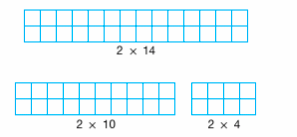
In chapter 11 part 4 Reys explains the importance of students having a well developed and deep understanding of prerequisites to multiplication such as place value, expanded notation, addition methods and the distributive property, along with the knowledge of basic multiplication facts. He also revises the use of certain Mathematical language associated with any method and how this need to be encouraged. This will allow the teacher to have more of an insight into how their student’s think (Reys, 2014).
References
Education Services Australia. (2013). Pobble arrays: make multiples. Retrieved from http://www.scootle.edu.au/ec/viewing/L2056/index.html
Education Services Australia. (2019). Multiplication Resources. Retrieved from http://www.scootle.edu.au/ec/search?accContentId=ACMNA031
Mathematics Shed. (2018). Multiplication Resources. Retrieved from http://www.mathematicshed.com/multiplication-resources-shed.html
ORIGO Education, & DePaul, D. (2019). The Doubling Strategy for Multiplication. Retrieved from https://www.origoeducation.com/blog/doubling-strategy-for-multiplication/
Reys, R. E. (2014). Helping children learn mathematics 2e. Retrieved from https://ebookcentral-proquest-com.ezproxy1.acu.edu.au

 Weekly Reflections